
When I started blogging, I thought I needed every shiny tool out there. SEO software, expensive design apps, paid grammar checkers — you name it, I thought I needed it. The problem? My wallet didn’t agree. I was just starting out, and dropping hundreds of dollars a month on tools wasn’t realistic.
If you’re reading this, maybe you’re in the same boat. You want to start a blog, grow it, maybe even make money from it — but the last thing you need is another bill. I get it. I’ve been there. And here’s the good news: you don’t actually need to spend big to get started.
In fact, some of the best free blogging tools for beginners in 2025 are so good you might wonder why anyone pays for the premium version. From writing tools that fix your grammar, to design tools that make your graphics look pro, to SEO tools that show you what people are searching for — there’s a free option for almost everything.
The trick is knowing which ones are worth your time. Because let’s be real: if you Google “best free blogging tools,” you’ll get 50 random lists with every tool under the sun. Some are helpful, but a lot are fluff. You don’t need to test 50 different apps. You just need the handful that actually move the needle. Most lists throw in 50+ tools, but honestly, only a handful deserve to be called the top free blogging tools for beginners.
That’s what this post is about. I’ll walk you through the free tools I wish I had when I started, and the ones I still use today. These aren’t “nice-to-have.” They’re the essentials — tools that will help you write faster, rank higher, design better, and stay consistent without spending a dime.
If you’re serious about starting out, the best free blogging tools for beginners in 2025 will save you time, stress, and money.
So if you’ve been putting off blogging because you think you can’t afford it, stick with me. By the end of this post, you’ll have a full toolkit of free resources to get your blog up and running in 2025.
Free Writing & Editing Tools
Here’s the truth: writing a blog post is way harder than people think. You sit down, you type out a few sentences, and then suddenly you’re staring at the blinking cursor like it’s mocking you. Been there. That’s where writing and editing tools come in — they make the process smoother, faster, and a whole lot less stressful.
Grammarly (Free Version)
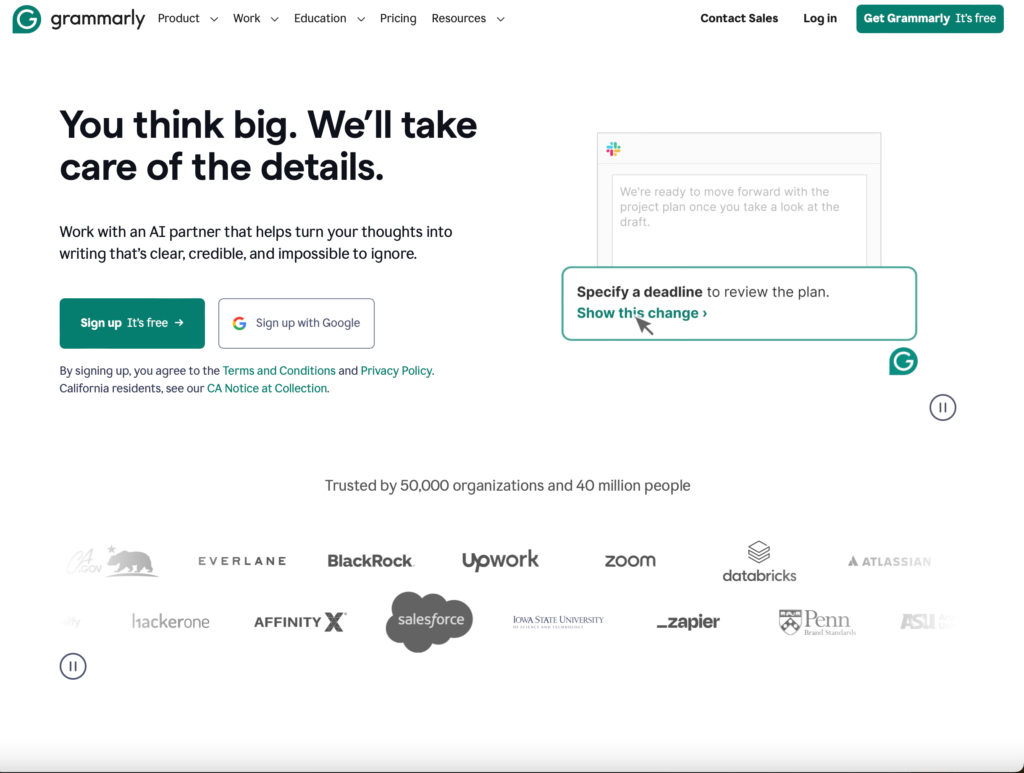
When I first started, I thought my grammar was “good enough.” Turns out, readers don’t love it when you mix up yourand you’re. Grammarly’s free version catches all the basic mistakes that can make your posts look sloppy. It checks spelling, grammar, and even tone. No, it won’t make you Shakespeare, but it’ll make your posts easier to read. And the easier they are to read, the longer people stick around.
Hemingway Editor
If Grammarly is like your grammar teacher, Hemingway Editor is like that one friend who tells you when you’re being dramatic. Paste your writing into the free editor, and it’ll highlight long, clunky sentences, passive voice, and words that make you sound like a robot. It’s basically your “keep it simple” coach. I still use it whenever I feel like my posts are turning into a college essay.
Google Docs
I know, I know — this one seems obvious. But honestly, Google Docs is one of the most underrated free blogging tools out there. You can draft posts anywhere, share them with others, and never worry about losing your work. Plus, it’s free forever. Most of my posts start in Google Docs before they ever touch WordPress.
That’s why Google Docs, Grammarly, and Hemingway always land on lists of the best free blogging tools for beginners in 2025.
Bottom line: You don’t need fancy paid software to write blog posts that connect. Between Grammarly, Hemingway, and Google Docs, you’ve got all the free writing tools you need to start strong. That’s why they’re always on my list of the best free blogging tools for beginners in 2025 — because they work, even when you’re broke and just starting out.
Free SEO Tools
Okay, so you’ve got words on the page — now what? If nobody finds your blog, it doesn’t matter how good your writing is. That’s where SEO comes in. Search Engine Optimization is just a fancy way of saying “make Google notice you.” If you’re just starting out, some of the best growth hacks come from using free SEO tools for bloggers 2025 like Keyword Planner or Ubersuggest.
The good news? You don’t need expensive tools to get started. Some of the best free SEO tools are more than enough when you’re new.
Google Keyword Planner
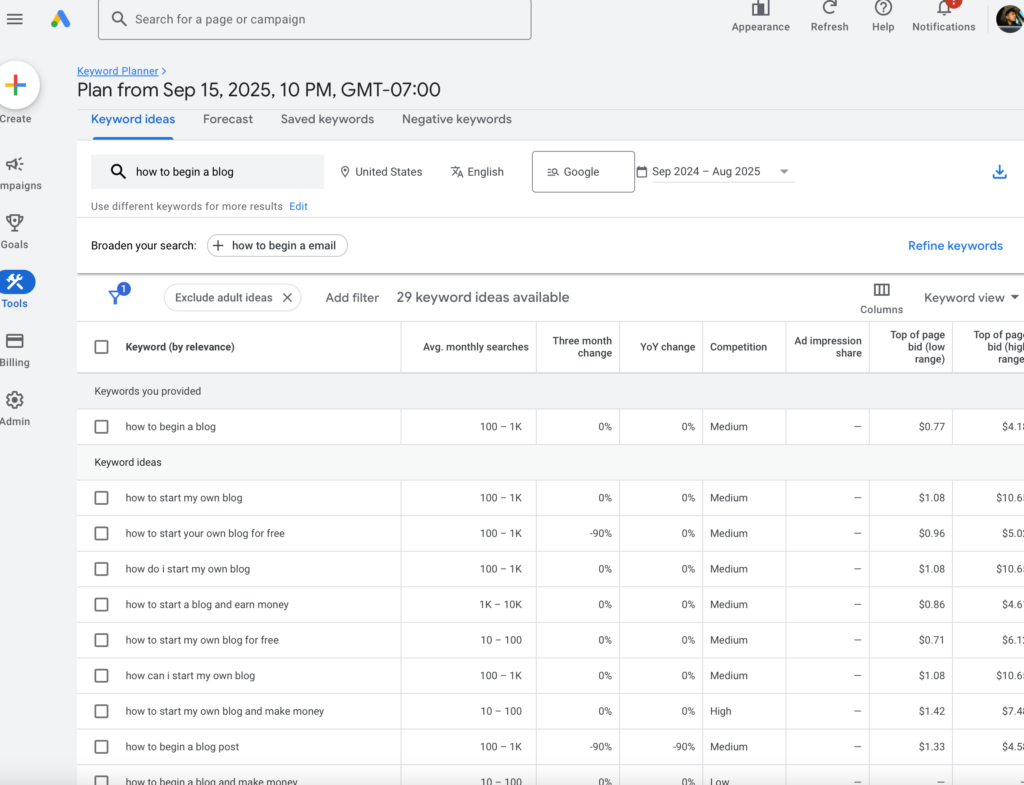
This one’s free because it’s made by Google itself. Technically, it’s for advertisers running ads, but bloggers can use it to find keywords people actually search for. Type in a phrase like “budget meals” or “fitness at home,” and it’ll show you the search volume (how many people are typing it into Google). Try Google Keyword Planner here. When I first used it, I realized I was writing about stuff nobody searched for. Lesson learned.
Ubersuggest (Free Version)
Created by Neil Patel, Ubersuggest is like Keyword Planner’s younger cousin. It shows keyword ideas, SEO difficulty (how hard it is to rank), and even what competitors are writing about. The free version has daily limits, but honestly, that’s fine for beginners. It forced me to focus instead of going down endless keyword rabbit holes.
AnswerThePublic
This one is pure gold for blog post ideas. You type in a keyword like “blogging tools,” and it spits out all the questions people ask about it: “What blogging tools do I need?” “Which blogging tools are free,” etc. It literally gives you blog topics on a silver platter. Check out AnswerThePublic here. I still use it when I’m stuck staring at a blank page.
Honestly, half of my early posts ranked only because I leaned on free SEO tools for bloggers 2025 instead of guessing. SEO can feel intimidating, but tools like Keyword Planner and Ubersuggest prove that the best free blogging tools for beginners in 2025 don’t need to be complicated.
Bottom line: SEO doesn’t have to be complicated or expensive. Tools like Keyword Planner, Ubersuggest, and AnswerThePublic are all you need to get started. That’s why they’re always included in lists of the best free blogging tools for beginners in 2025 — because they give you real data without draining your bank account. And trust me, writing posts that people actually search for is way more fun than writing for crickets.
Free Design Tools
Here’s the thing: you don’t need to be a pro designer to make your blog look good. When I started, I thought design meant spending hours in Photoshop (which I didn’t even know how to use). The truth is, there are free tools that make creating blog graphics, pins, and headers so easy even total beginners can do it.
Canva (Free Plan)
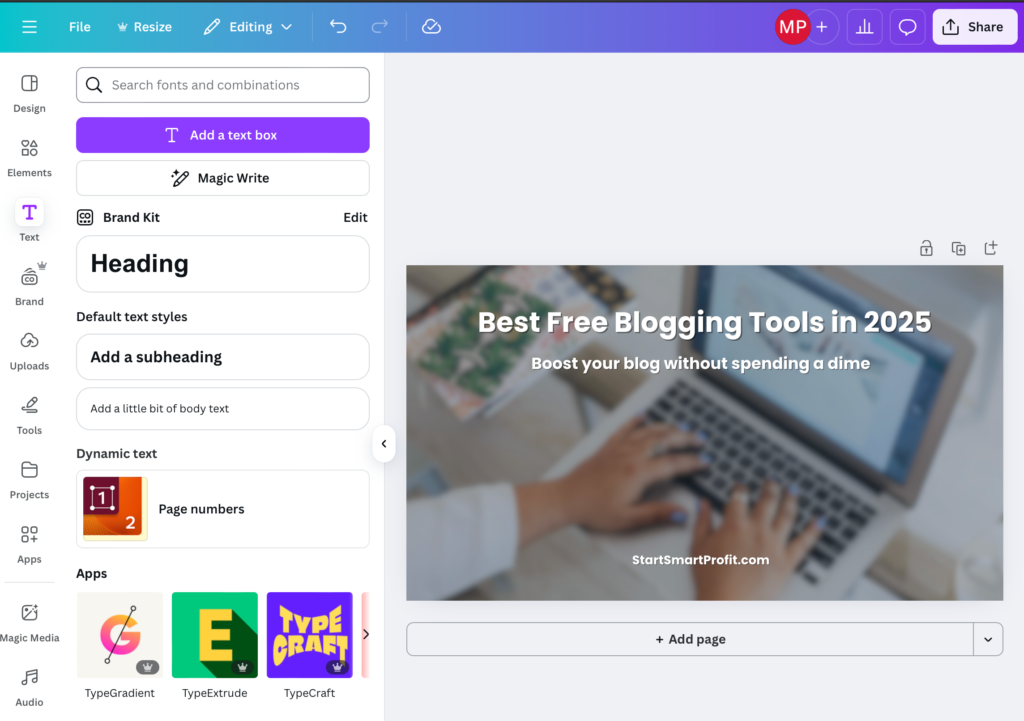
Canva is a game-changer for bloggers. The free plan gives you thousands of templates for blog graphics, Pinterest pins, Instagram posts, and more. You can drag and drop text, images, and shapes to make everything look polished. I still use it for quick graphics because it saves time, and honestly, nobody can tell it’s free.
Canva, Unsplash, and GIMP are easily some of the best free content creation tools for 2025, especially for bloggers who hate design.
Canva alone is reason enough to believe in the power of the best free blogging tools for beginners in 2025.
Unsplash & Pexels (Free Stock Photos)
You can’t write posts without images — they break up walls of text and keep readers engaged. But paying for stock photos isn’t cheap. That’s where Unsplash and Pexels come in. Both offer free, high-quality stock photos you can use legally on your blog. Want a picture of someone drinking coffee in a trendy café? Boom, free. Want landscapes for your travel blog? Done.
GIMP (Free Photoshop Alternative)
If you need something more advanced than Canva, GIMP is a free, open-source Photoshop alternative. It has a learning curve, but it’s powerful. You can edit photos, remove backgrounds, and create detailed designs. Honestly, if you’ve ever looked at Photoshop pricing and thought, “Nope,” GIMP is your answer.
AI is everywhere now, and some of the best free AI tools for blogging can help brainstorm ideas, polish headlines, or speed up writing.
Bottom line: You don’t need a degree in design to make your blog look good. Tools like Canva, Unsplash, Pexels, and GIMP are why I always include design apps in my list of the best free blogging tools for beginners in 2025. They’re free, easy to use, and they make your blog look professional from day one.
Free Analytics Tools
You can’t improve what you don’t track. When I started blogging, I thought “eh, I’ll just post and hope for the best.” Big mistake. Without analytics, you’re basically blogging blind. The good news? The best tracking tools are totally free.
Google Analytics
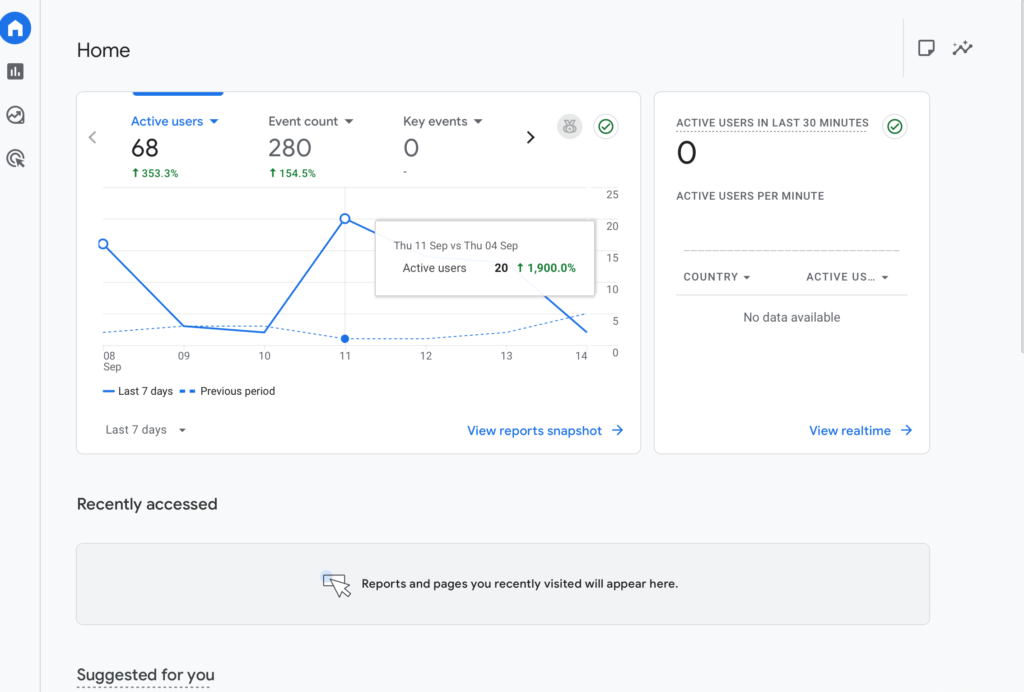
Google Analytics is the gold standard. It shows you how many people visit your site, where they come from, and what posts they actually read. The first time I checked mine, I realized most of my traffic came from one random post I almost didn’t publish. Without Analytics, I never would’ve known what was working.
Google Search Console
Google Search Console is like a behind-the-scenes report card from Google. It tells you what keywords people use to find your blog, which pages are ranking, and whether your site has errors. It’s basically Google whispering, “Hey, here’s how you can get more traffic.” And it’s 100% free.
Bottom line: Data doesn’t lie. Tools like Google Analytics and Search Console are why I always include analytics platforms in my list of the best free blogging tools for beginners in 2025. Because without them, you’re just guessing — and guessing won’t grow your blog.
Google Analytics and Search Console aren’t just optional — they’re two of the best free blogging tools for beginners in 2025 because they show you what’s really working.
Common Mistakes Beginners Make
Alright, let’s be real. Free tools are amazing, but beginners (including me when I started) tend to mess this part up. Here are the most common mistakes to avoid:
1. Downloading too many tools
Just because it’s free doesn’t mean you need it. Loading up on 20 different apps will overwhelm you and slow you down. Stick with a small set of the best free blogging tools for beginners in 2025 that cover the basics. Here’s a great guide on digital minimalism if you struggle with cutting back.
2. Thinking free = bad
I used to think “if it’s free, it must suck.” Nope. Some free tools (like Google Analytics or Canva) are better than half the paid alternatives. Don’t underestimate free versions — especially when you’re starting.
Between writing, SEO, and design, the right mix of free content creation tools for 2025 makes blogging a lot less stressful.
3. Ignoring upgrades forever
Free tools are perfect in the beginning, but at some point, you’ll want to upgrade. Whether it’s Canva Pro for more templates or a premium SEO tool for more data, don’t be afraid to invest once your blog grows. Here’s a balanced take from HubSpot on when to invest in software.
Bottom line: Free tools are a blessing, but don’t let them trip you up. Keep your toolkit lean, don’t assume free means useless, and be open to upgrades when the time comes. That way, you’ll get the most out of the best free blogging tools for beginners in 2025 without wasting time or burning out.
Avoid these mistakes, and you’ll actually get results from the best free blogging tools for beginners in 2025 instead of wasting time.
Conclusion
Starting a blog can feel overwhelming, especially when you see lists of expensive tools that make it look like you need to drop hundreds of dollars just to get started. But here’s the truth: you don’t. Some of the best free blogging tools for beginners in 2025 are more than enough to help you write, design, track, and grow your blog in the early days.
Think about it — Grammarly fixes your grammar, Canva makes your designs look pro, and Google Analytics shows you who’s reading your posts. All of that without spending a dime. These tools let you focus on the real work: writing helpful content and showing up consistently. That’s what builds an audience, not how much you spend on software.
Of course, free tools won’t do everything. At some point, you’ll probably want to upgrade — maybe Canva Pro for more templates, or a premium SEO tool for deeper research. But don’t stress about that right now. Free tools give you everything you need to start building momentum.
Beginners don’t need paid subscriptions right away — the best free AI tools for blogging are more than enough to get started. Success doesn’t come from spending money; it comes from using the best free blogging tools for beginners in 2025 consistently.
And if you ever doubt that starting simple works, just look at the stories of other bloggers who began with free tools and built real businesses. Here’s a collection of blogging success stories that prove you don’t need a huge budget to make blogging pay off.
If you’re serious about starting your blog, your next step is simple: grab the free tools above, set up your site, and start publishing. And if you’re not sure how to pull it all together, check out my guide on How to Start a Blog and Make Money in 2025. It’ll walk you through the process step by step.
Start small. Stay consistent. Use the tools that make life easier. That’s how you turn a simple blog into something real.